

The dragons on where to find opportunity today
+ Joanna Griffiths, Jay Klein, Tara Bosch, Marc Lafleur, and Barb Stegemann speak to Milk Bag.
Good afternoon everyone.
Last night I went to the screening for the first of a two-part Dragon’s Den finale at the TIFF Lightbox. After two decades on air, executive producer Molly Middleton dreamt up a spin-off in which five entrepreneurs who’d appeared on the show and went on to build successful businesses—Jay Klein, Joanna Griffiths, Marc Lafleur, Barb Stegemann, Tara Bosch—would return, ready to invest their own capital.
It not only made for excellent television, but an event that brought together a large part of the business community that Milk Bag is focused on covering. The guest dragons were there. Actual dragon Michelle Romanow was there. Moez Kassam, who should be a dragon, was there. I sat with Andrea Grand, the co-founder of the sparkling water brand Barbet, who, in the moments after Eden Hazan and his brother Don secured investment for their frozen pizza company Dreamcrust, whispered “this is so motivating.” And that, is the power of this show.
Beyond inspiring a new generation of entrepreneurs, Dragon’s Den established the first wave of celebrity founders in a pre-social media era: Kevin O’Leary, Arlene Dickinson, and Robert Herjavec are now household names with the star power to make or break companies, and though the guest dragons are already well-known in their own right, the show will likely bring them more into the mainstream.
In today’s edition: The guest dragons on the businesses they’d start today, why everyone is talking about the Block layoffs, a Montreal-based ShopMy for travel is now worth $300 million.
The world has changed a lot since these founders first pitched their ideas in the den, so my question to them was: If you had to pitch a new business today, what would it be?
Jay Klein, The Pur Company
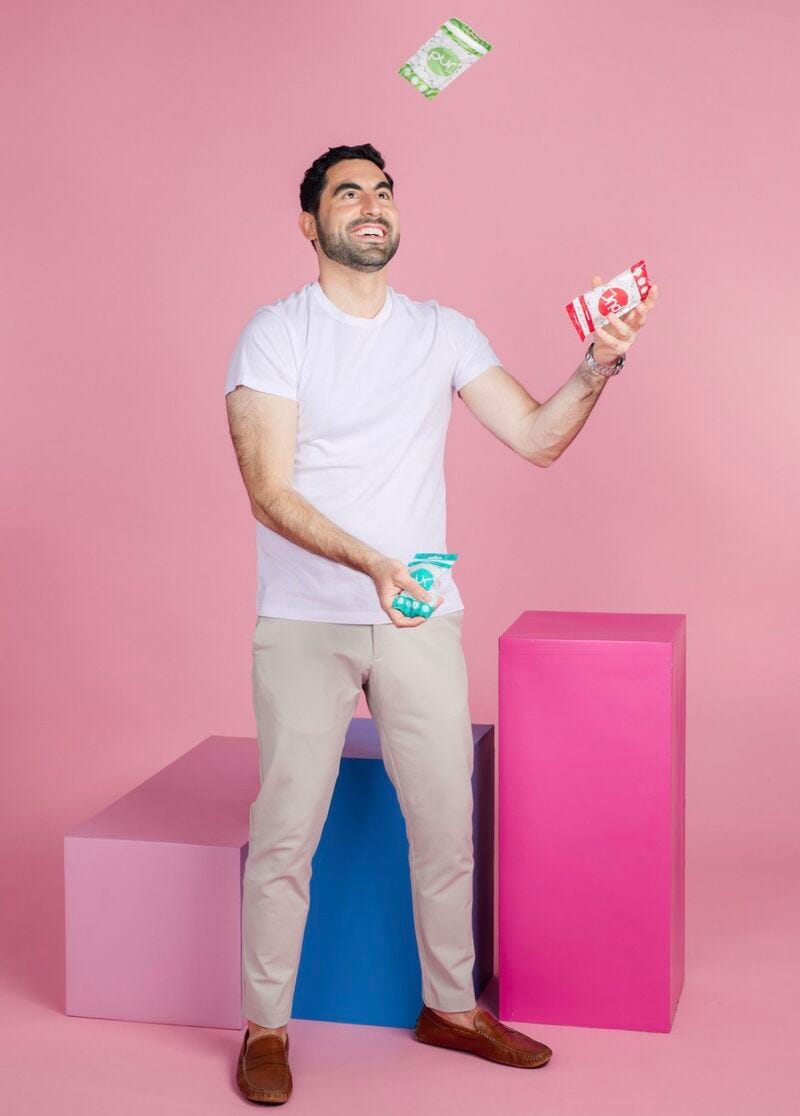
“I’d probably sell something more expensive, that doesn’t expire.”
You need enormous sales numbers to generate positive cash flow for low priced items. If I were to do it again, I’d probably sell something more expensive, where the money piles on faster with the same level of sales. I like to joke that if I sold airplanes, I’d only have to sell one, which would be much easier than selling a lot of gum. Something that doesn’t expire, too. There’s the airplane example, or I think of anything finance-related, like banking and management.
There is an opportunity to create products that those with significant resources demand, and the barriers to entry for those businesses are very high. In CPG, it’s easy for someone to enter a market with the same idea, for a granola bar or water, and access many, many manufacturers. You have to work that much harder. When there aren’t so many manufacturers, and a consumer is less price sensitive, it gives you more stability than when you’re competing with discounts.
In the food business, people chase what everyone else is doing, so I really try to stay away from the herd—at one point, there were hundreds of energy drinks, and all of them were trying to be like RedBull. But leaders lead, and RedBull is still Redbull. I like to ask, how can you be a leader at something? How can you be the best? Other elements I like to deconstruct: Do you have a path to success? Can you scale? Is there a global nature to what you’re doing?
Tara Bosch, Smart Sweets
“It’s actually exactly what I am building right now [at snackish].”
I am always drawn to ideas with a radical value proposition. Something that does not just tweak a category but redefines it. I look for products people already love and grew up enjoying but feel conflicted about as adults. The sweet spot is where you can remove friction and deliver joy. It has to be instantly clear, emotionally resonant, radically differentiated at shelf, and strong enough to build a movement around, not just a product.
Nostalgia is incredibly important to me in that process. The brands that shape us are usually tied to memories. After school snacks. Road trips. Sleepovers. The taste you associate with a certain chapter of your life. When you can tap into that emotional memory and reimagine it in a way that aligns with how people want to live today, that is powerful. You are not just selling a product. You are reconnecting people to a feeling.
That is actually exactly what I am building right now. A new vision that launches across North America in June. It is rooted in the same belief that built my first company. You should not have to choose between taste and ingredients, between fun and feeling good. It is about taking something familiar and beloved and rebuilding it with intention. Craveable, fun, and built for a new generation (hint: if you ever feel a little snackish, this one is for you).
Marc Lafleur, truLOCAL
“I’d go 100% all in on developing niche AI products or services.”
For myself personally, it’d be a business management interface. In this example, I’d target non-technical founders and CEOs doing under $30 million in revenue. In every small company, teams are using five different tools: Slack, Monday, Jira, Meta Business Suite, Google Ads, etc. Getting everyone onto one tool is nearly impossible. Every founder has tried it. Big companies have solved this, but small businesses haven’t.
With AI, you don’t need everyone on the same tools. The AI can pull together everything from raw data and organize it into one interface, regardless of what tool it came from. One place to see everything, track progress, manage projects, and monitor KPIs. No technical knowledge required. The founder or CEO sees what’s happening across the business, without needing to know where any of it is coming from or how it got there.
The main thing to pay attention to for something like this, is to go niche. Going narrow forces you to get the right things right. A general tool gets your customer 80% of the way there. That last 20%, the features that only your specific audience cares about, is what decides whether they use your product or keep using the big platforms. You can’t build that 20% for everyone. But you can build it for one specific customer.
That’s also what reduces your risk. Building for a specific audience means solving real, known pain points. You can talk to your customers, understand what breaks in their workflow, and build for that. You’re not guessing. The broader you go, the more you’re guessing. I think it’s the best time in the world to be a founder. The barriers to entry are gone, and everyone who has ever been interested in entrepreneurship should take this as their sign to do it.
Barb Stegemann, 7 Virtues
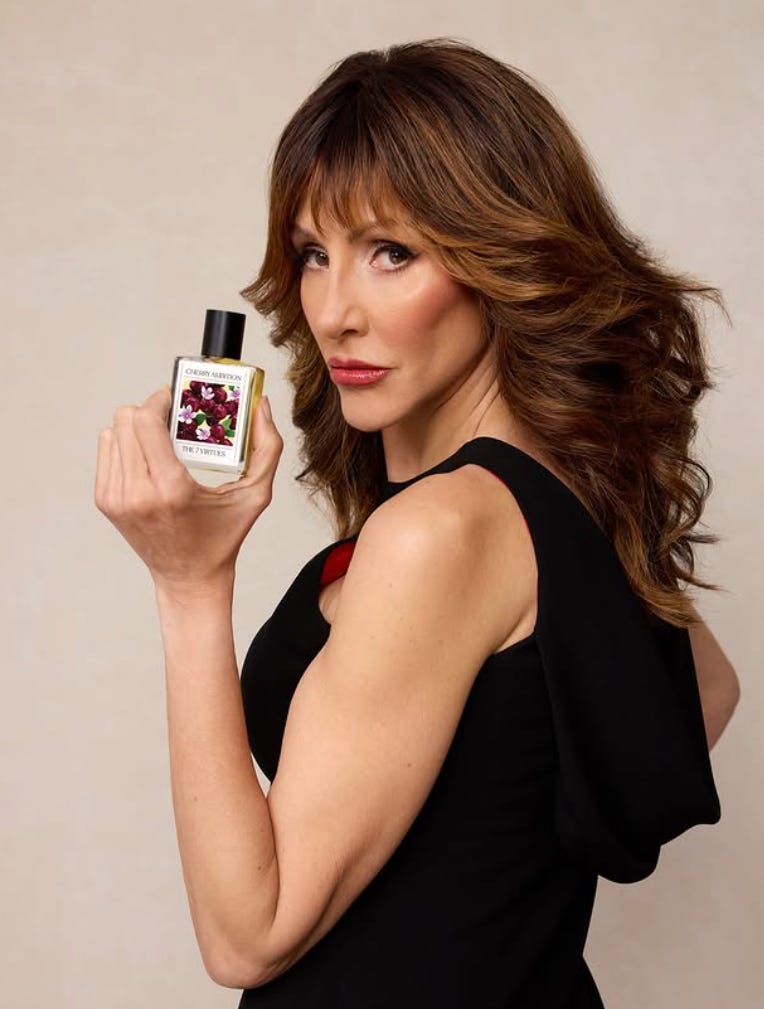
“If I were to pitch another business, it would be another beauty brand.”
Beauty is growing. But success does not depend solely on the industry. It’s on the business idea and the founder who will end up driving the business to success. If I were to pitch another business, it would be another beauty brand. I’ve had a lot of fun experimenting with making lipsticks by hand. I’d continue to sustainably source clean ingredients, but would go into skincare and makeup.
It would be exciting to return to making clean, literally edible lipstick. Women end up consuming up to 4 pounds of lipstick in a lifetime, so you want to ensure the ingredients are clean. Similar to my initial pitch, there are lovely oils that can be sourced to support farmers around the world—shea butter from Africa, castor oil from Brazil, and Argan oil from Morocco. What a journey that would be.
Joanna Griffiths, Knix
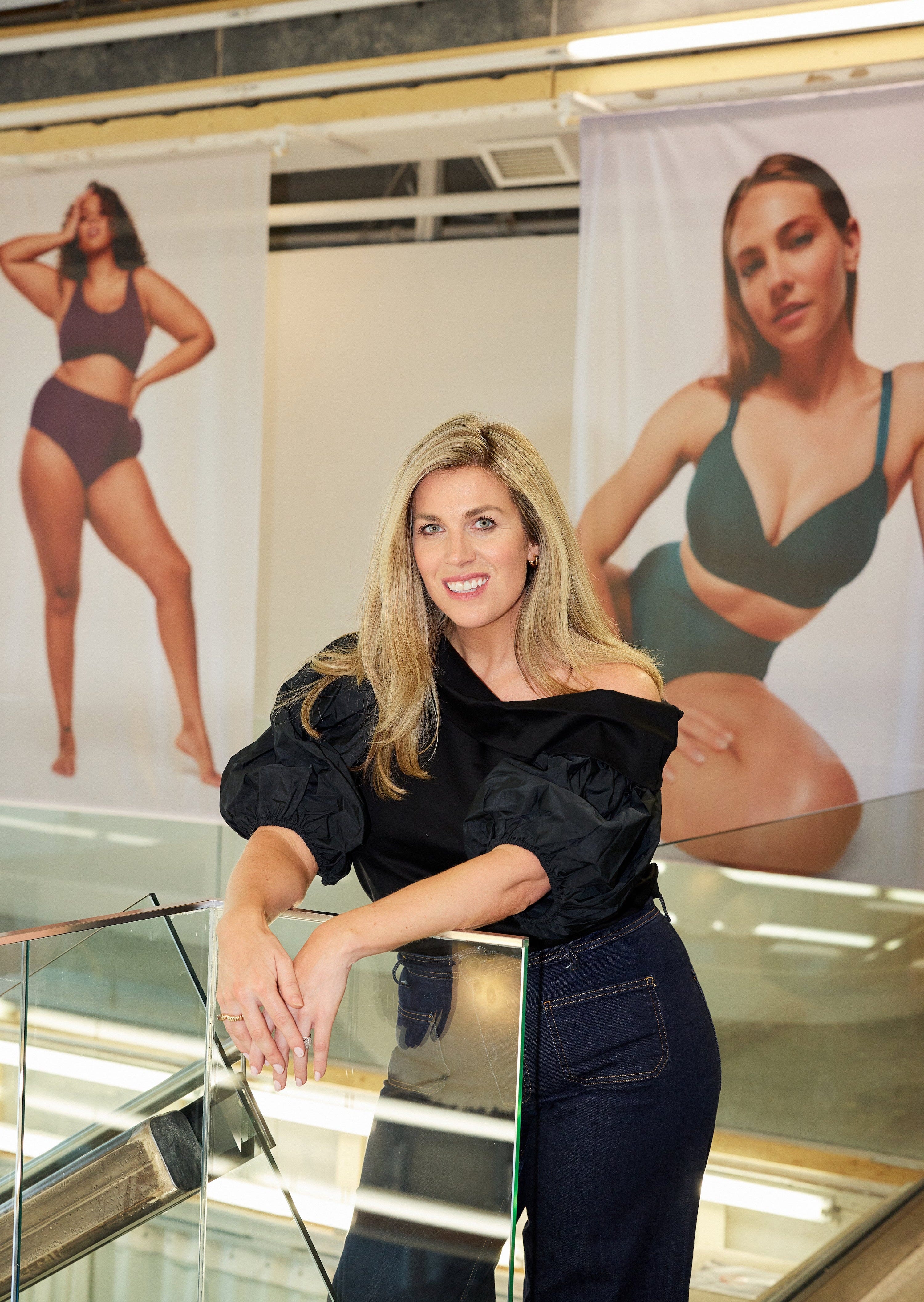
“I think the opportunity to improve men’s basics is huge.”
One hundred percent it would be MNTD, the men’s underwear brand that we launched about three months ago. Men want good daily essentials that keep them feeling fresh. The opportunity to improve men’s basics (think underwear, t-shirts, socks) is huge and we have the ultimate know-how to make it happen since we’ve built authority in the same industry for women for more than 13 years.
A lot of the items currently on the market are at two ends of a spectrum—plain with minimal quality, or over-indexed innovation that doesn’t really meet that customer where they are. Since launching, the reaction and sales have exceeded what we ever could have hoped for. Our t-shirts and boxer briefs have been best sellers and I’m eager to continue investing in that piece of our business.
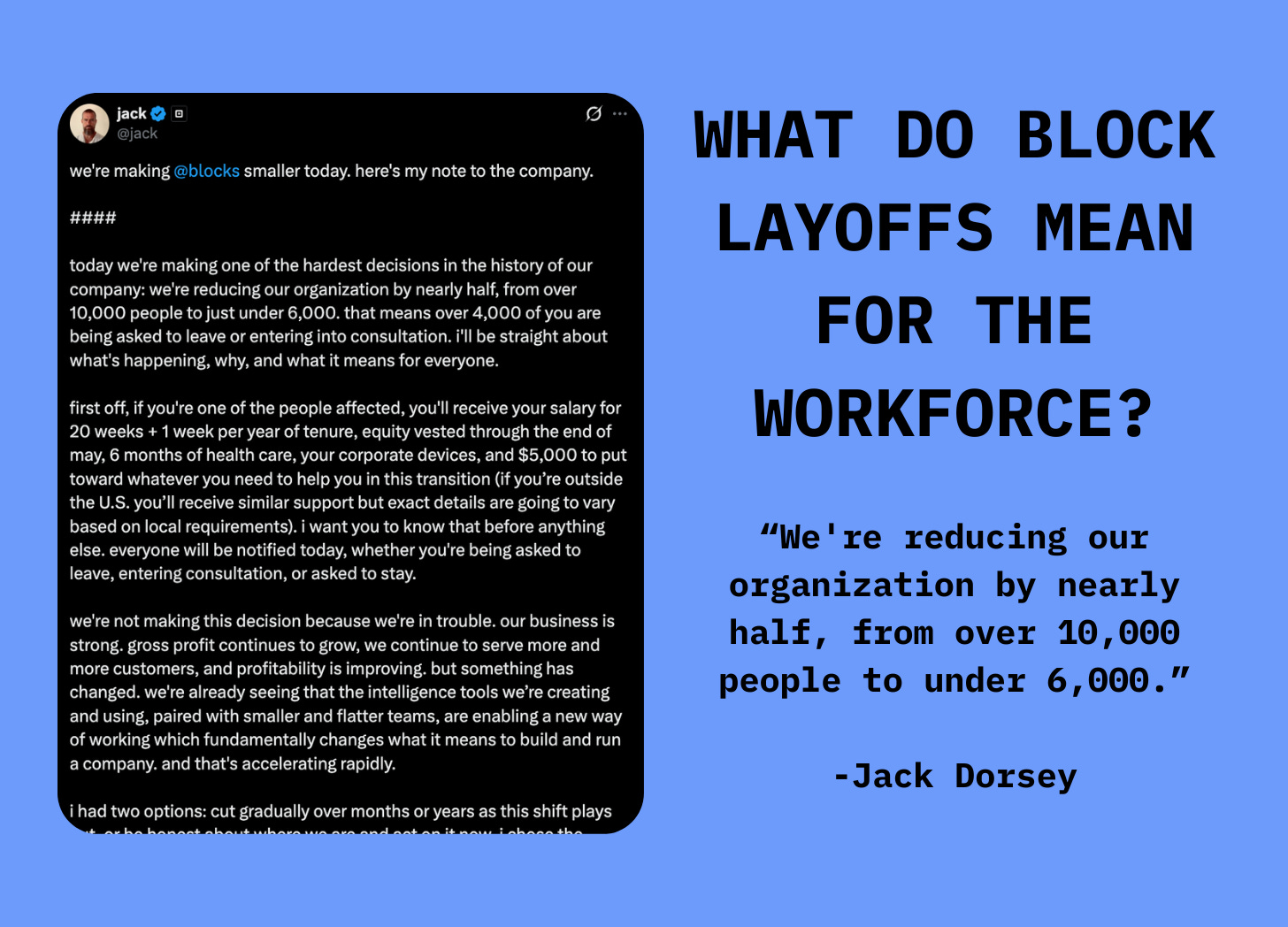
Everyone is talking about what the Block layoffs mean for the white collar workforce. By now you’re probably seen that Jack Dorsey is firing 40% of his employees to restructure the company into smaller, AI-supported teams. Because markets have reacted so well to the news, the immediate fear is that other companies will try this without having the systems and tools to pull it off. And while it’s not the main takeaway, I wonder if more founders will start posting their internal notes (that they know are going to leak online anyway).
Peter Kafka of Business Insider broke down why Netflix likely walked away from its $83 billion bid to buy Warner Bros. Discovery. He writes: “If your investors don't want the deal, and the people who need to approve the deal [Republicans] don't want the deal, what options do you really have?” That means Larry Ellison’s Paramount could end up owning all of WBD if the company can get past California regulators: Not just the studio and HBO, which Netflix wanted to buy, but its TV networks as well, including CNN.
This week, investor Ross Gerber said Paramount could overpay, leaving it to manage losses “forever” while Netflix earns a $2.8 billion break up fee.
Roselle’s Oishii strawberry cheesecake tarts are your sign that Toronto has fully embraced these premium Japanese berries. An eight-pack sells for $14 and they’re sold out at Eataly and a handful of other grocery stores in the city.
Seriously considering writing off this ticket to have the 20 best chefs in the city cook for me over the course of one evening. And it’s all for charity, too.
In the last two months, there have been at least two sponsored retreats for women founders. CIBC, Bennett Jones, and Deloitte were among companies that sent April Hicks, the CEO of Toast, and five other founders to Whistler this month for what looked like just a fun weekend of women hanging out and bonding over their work. A similar event put on by a group of younger women founders was marketed to sponsors around the social reach of those participating, so I wonder if corporate Canada sees supporting these informal and community-centric trips as both a relationship and brand building effort.
The Roncesvalles Village BIA is not messing around with their creative budget this year. They’re currently looking for a muralist to help develop a project around the World Cup and a designer to rebrand the Polish Festival.
A Toyota Rav4 somehow now costs $60,000 so of course most of us are considering buying a Chinese EV. Even with the supposed security risks.
A Montreal-based company that I would describe as the ShopMy for travel is now worth about $300 million. Stay22 is making between $70 million and $100 million a year by enabling influencers to earn commissions on bookings made by their followers. This will be a nice income boost for those who stay for free at the €1,800-a-night Hôtel Plaza Athénée (since luxury hotels stand to gain the most here), but ultimately it just brings more ads into your feeds.
What does it mean, to see Charles Khabouth “pivoting” to $20 meals?
A global pantyhose company will buy Sheertex. Not a great outcome for the investors that put $37.5 million more into the company last year. After years of millions in losses, Sheertex said it would have become profitable this year.
Totally agree with Marc on a non-technical AI focused software for the everyday worker that streamlines everything. The fact that I’m toggling between so many different softwares in my Marketing role decreases my efficiency so much
I didn’t make the connection! I purely saw it as a cool cultural thing but I totally get it.