

Good evening everyone.
This will be the last edition of Milk Bag for the year, mostly so I can turn my attention to perfecting a recipe for mulled wine, getting a website set up, and preparing the scoops that will make this the best newsletter in your inbox.
Because of the link-heavy nature of Milk Bag, you might not realize how much original reporting goes into each edition. Some of my favourite gets that were exclusive to Milk Bag — or appeared here before anywhere else — include the country’s first Gen Z-focused VC; why banks are becoming media companies; a look at the city’s underground psychedelic economy; Blue Mountain’s push into premium memberships; the launch of an Ontario-focused private airline; how social media is helping small businesses catch shoplifters; why hotels are launching wind-down services; and the nationwide expansion of Fairgrounds.
That’s a small sample pulled from the last two months, and not counting the great stories reported by others that have made it into the newsletter. Milk Bag was first to cover the openings of Hopeless Romantic, AIRE, Toronto’s ASMR spa, and the first to interview Mac Bauer, Carly Jordan, and Chloe Bow, all of whom have blown up in North American media in the last two weeks.
In 2025, Milk Bag made it onto Substack’s leaderboard for weeks at a time, was featured in Toronto Life, Canadian Business, Global News, and on radio stations across the country. It’s also earned a place in the inboxes of some of the most impressive people who are shaping Canadian business and culture.
I don’t take your attention or support for granted. If you’re one of the more than 15,000 people who read Milk Bag this year, shared it with friends and coworkers, or paid for a subscription, I can’t thank you enough. And if you’re one of the people who have reached out offering to help fund it, write for it, grow it, or throw a party for it, you’re why I’m able to keep it going in 2026.
That’s it from me for now. If you’re sitting on an interesting story, email me anytime over the holidays, or you can let me buy you a drink at The Alphorn.
In today’s newsletter, Toronto-based design magazine Azure has been acquired, the market for artificial trees, and why we might be giving less. But first, Fitzrovia CEO Adrian Rocca answers your questions.
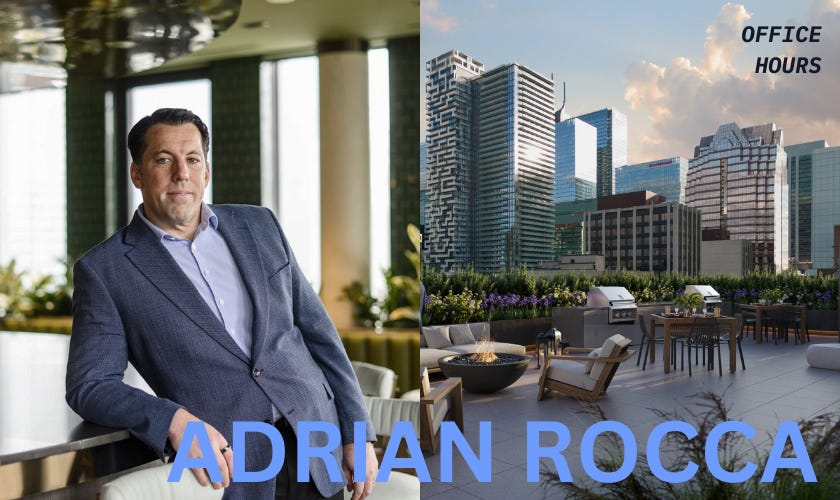
Office Hours is a series where Milk Bag readers interview those who are driving Canadian business and culture. This interview is edited for clarity and length.
You oversee the development and management of your properties. This is more of a statement, but having lived at The Selby, it’s striking to see the difference in the quality of that building compared to my building in CityPlace. - Milk Bag
For a condo developer that locks their revenue years ahead of delivering a building, their incentives are to value engineer and potentially cut corners. If we make those decisions as a long-term owner, that’s a potential liability that sits in our books, right? The incentives for us are to start with the end consumer and work our way backwards. That’s why we invest in our cafes, lobby bars, and even our school platform. I don’t know if you know this, but I started the multifamily platform at Tricon. I painstakingly designed those suites, the lobby, and the amenity package at The Selby, so I’m glad you enjoyed it. With Fitzrovia, we wanted to turn that up three notches.
With all the highly produced amenities—pools, bars, clinics, childcare—how many are actually used and which ones just look great in marketing but underperform in reality? - Krista
It’s been a positive surprise to see how many people use our pools. If you ask a condo developer, they’re a waste of money because usually nobody does. I also didn’t expect so many residents, about 25%, to take advantage of our partnership with the Cleveland Clinic. Then there’s the ski simulator, which looks really cool but is getting less uptake. We’ll probably pivot away from that in future, but we were excited to try it.
A few weeks ago, Maclean’s published a piece that made the case for lifelong renting. I think many people are considering renting for longer, but how have the economics have changed? - Mark
When we run the math, it’s about 25% cheaper to rent versus own. But I think the concept of a mortgage as forced savings is the next conversation to have. We’d encourage our residents to put their savings into an index or a bond fund, and they could compound very closely to where home prices have appreciated in a normalized market—not like what we’ve seen over the last couple of years. I think there are ways to get those forced savings, and we don’t have a solution yet, but we’re thinking through a product that deals with that potential issue that I think we’ll roll out early next year.
I’m sure there are many people who’d love to live in a Fitzrovia building, but can’t afford it. With some projects sitting at above 20% vacancy, at what point do you reduce the rents? - Peter
It takes time to lease up a very large building. Our assets that are not an ‘active lease up’ are about 95% leased. And we actually think it’s a really attractive price point if you look at the holistic offering. Whether it’s saving you the cost of a gym membership, Wi-Fi, or weekly events.
In markets like Toronto and Vancouver, we often hear about “housing supply” as a core issue. What’s the biggest misconception you think Canadians, and governments, have about what it takes to add supply? - Sonia
This is a super hot topic. The fact is that new starts are down almost 70% and that is going to be a problem two years from today, that will persist for about four years beyond that. That will create a tight, robust rental market, which is not good for the end consumer. And to be honest, it’s not good for developers and institutional investors either. Long term, you want steady supply growth that is in lockstep with immigration and natural household formation. What’s driving that? Look at the economic model. Hard costs (physical construction) and soft costs (project expenses) are up to normal market forces. Nothing you can do to change that. But 30% of our total development costs is government fees and levies. And so we are actively talking to all three levels of government about waiving those for about a year and a half to two years, then bringing them back into play. We have got to get as much new supply in the market, like tomorrow. We cannot wait any longer, because all it’s doing is compounding the supply issue.
What is your opinion on the latest changes to rental regulations in Ontario, and how the Residential Tenancies Act and the LTB impact the rental market in Ontario? - Jan
The Residential Tenancies Act provides important tenant protections, but the Landlord and Tenant Board’s severe backlogs and lack of predictability create uncertainty for everyone. When disputes take months or years to resolve, it discourages reinvestment in existing buildings and makes it harder to attract the long-term capital needed to build new rental housing. This new legislation isn’t about weakening tenant rights, it’s about fixing the system so it’s faster, fairer, and functional.
The full interview is available here. Who would you like to interview next?

Behind every Christmas tree farmer is an association responsible for spurring demand in a shrinking industry. A piece published in the New York Times today covers a U.S. organization dedicated to marketing live-cut trees, as the market for fake trees grows year after year. The debate between real and artificial trees is alive and well: on one hand, artificial trees are easy to set up and maintain, while a real tree offers the annual ritual of picking it out and tending to it over the month(s). In Canada, the president of the Canadian Christmas Tree Association recently wrote:
“We’ve heard objections … that sales are strong and therefore the need to invest in promotions is not needed, however let’s remember the market share the artificial industry has garnered over the last decades.”
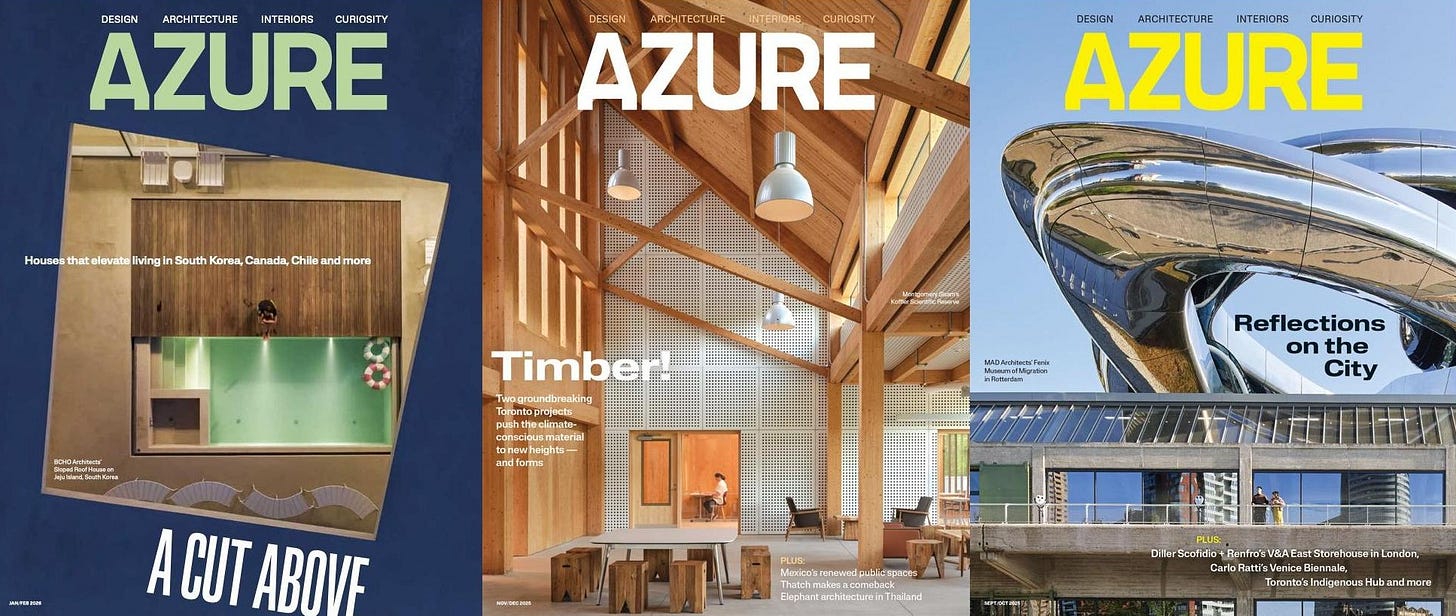
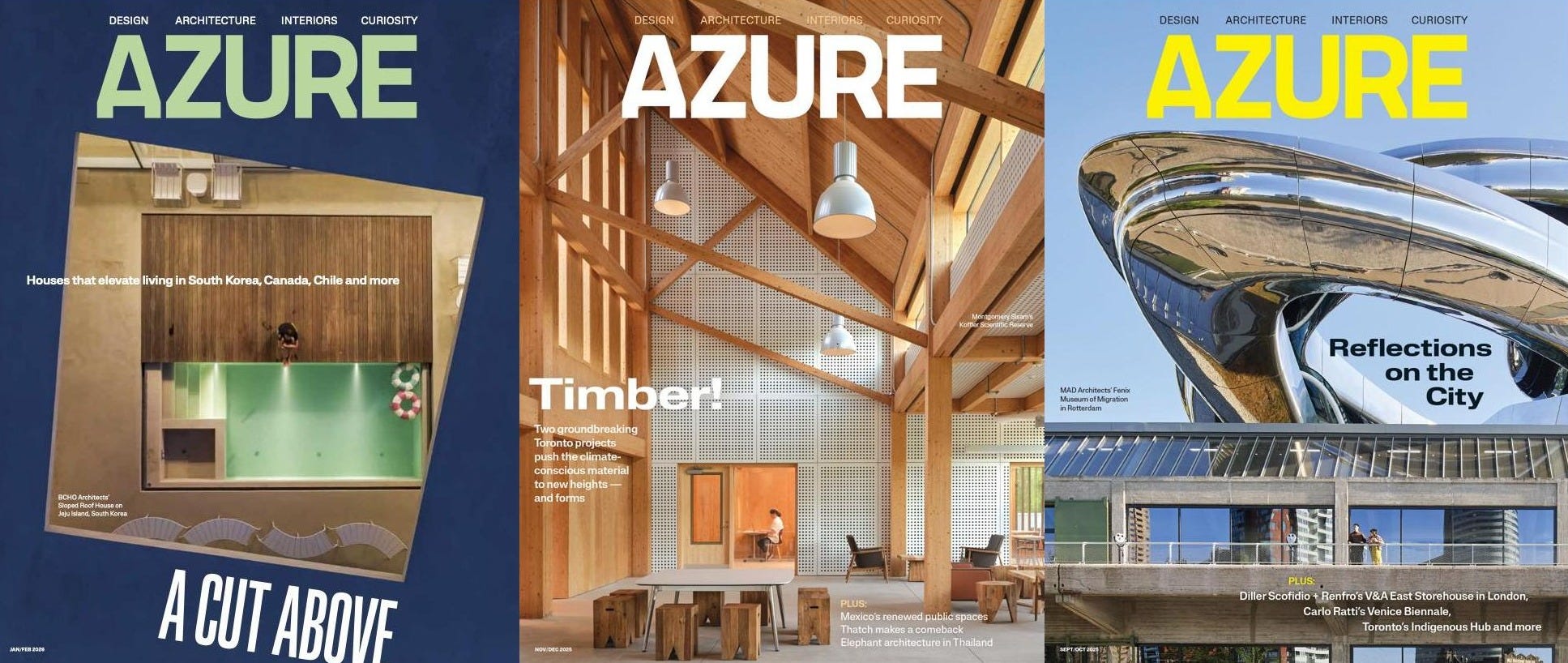
Toronto-based Azure was bought by Sandow Design Group. Elizabeth Pagliacolo will stay on as the editor in chief as the U.S.-based brand group takes over Canada’s leading architecture and design magazine.
The percentage of Canadians who donate to charity has dropped by more than five percentage points over two decades. The comment section of this article from The Globe and Mail is on fire — “pretty rich calling us ‘grinches’ when everyone is getting gouged by three levels of fiscally irresponsible government and dealing with unsustainable living expenses” — and mentions non-obvious factors like “annoying” marketing from charities, feeling “overwhelmed” with options, and “the decline in religious observance and increase in narcissistic visions of selfhood.”
It seems like this is not felt by the city’s main cultural institutions: Toronto Life found that the AGO, ROM, and Gardiner Museum have all received millions in donations from donors over the past few years.
One of the world’s largest activist funds took a $1 billion stake in Lululemon. In the days since Calvin McDonald stepped down, Elliott Investment Management is getting involved with the new CEO search.
Charles Khabouth told Glory Media that “nobody needs another pasta.” He was making a point about service in hospitality, but I couldn’t help but think about it while reading this article in The New York Times about the trend of restaurants that are catering to the 1% with truffles shavings or Wagyu flights priced at hundreds of dollars a pop. Not yet, Toronto.
The West End Phoenix spoke to the co-founders of Horses Atelier.
On Wednesday night at the Powder Room, I briefly chatted with the star of the soon-to-be hit Christmas movie Marty Supreme. It’s not every day you get to ask Kevin O’Leary for business advice, or what it’s like to work with Gwyneth Paltrow. The night before, he was at the New York premiere, marking the tail-end of a marketing tour that has included selling $250 windbreakers and sending an orange blimp to fly over LA.

That’s it from me. Have a great holiday.
I love your newsletter