

How Highway 407 makes $2B a year
Kevin O'Leary is building a Utah data centre, every brand needs a smoothie.
Good evening everyone.
Over the weekend, food stylist, chef, and TV personality Michelle Rabin hosted her annual charity bake sale in the west end. I’ve never seen so much baking starpower under one roof: Julia Gallay from Gallz Provisions and Matthew Faust from Brodflour were among the line up of 20 bakers from across the city.
I picked up rugelach from Bonnie Stern, crispy balaclavas from the great Dylan Muñoz, and savoury picks from Noctua Bakery. “There’s a lot of waste in film and TV, and though lots of sets bring leftovers to food banks and soup kitchens, this is a way I can give back to the community every year,” Michelle told me.
I highly recommend marking it in your calendar for next year.
Milk Bag covers the business stories you won’t find on Apple News. If you have a story tip or want to work together, email me.

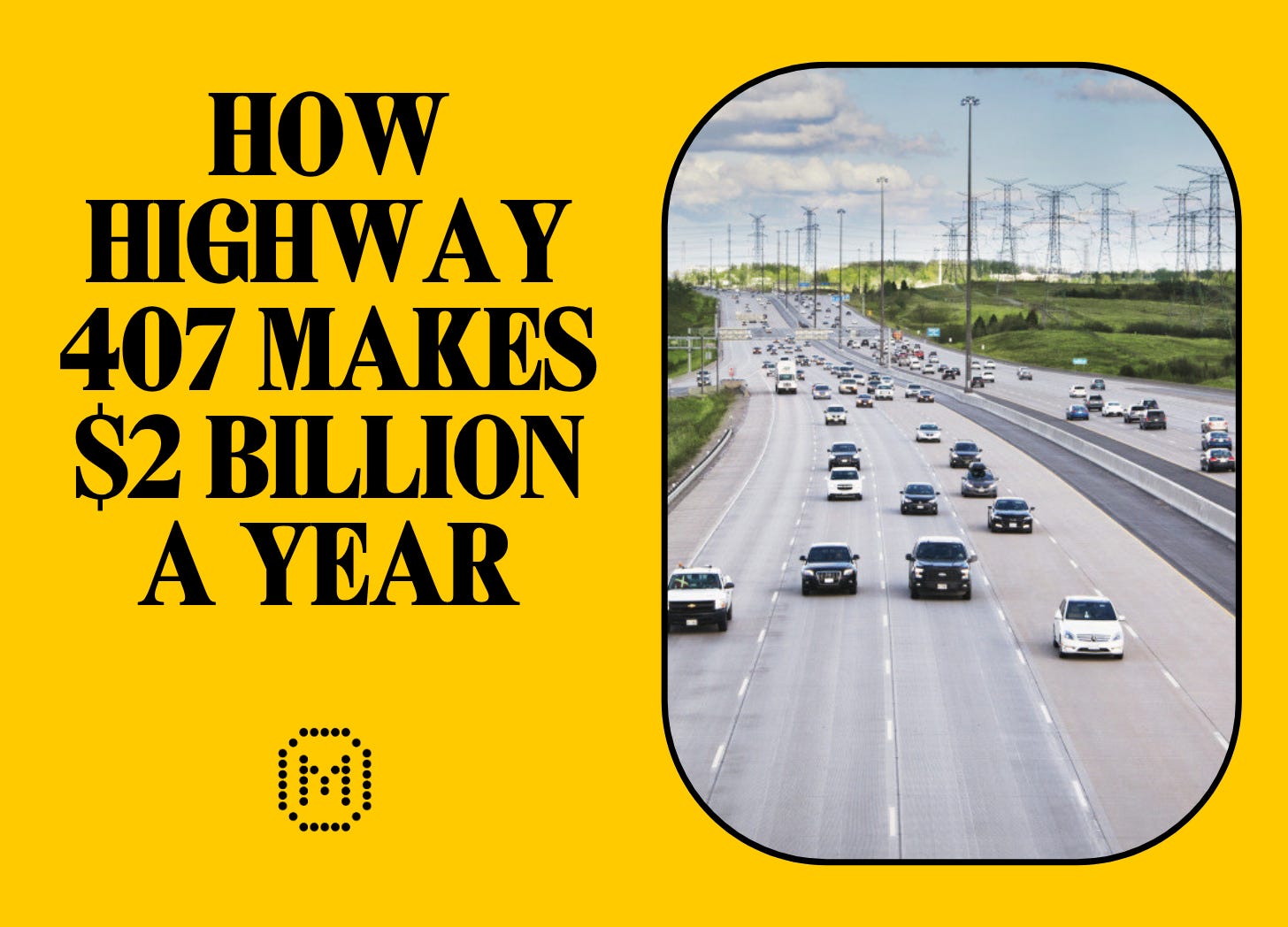
Every day, the 407 sees more than 387,000 trips across its 108 kilometre network of roads connecting Burlington in the west and Pickering in the east.
Last year, those trips brought in more than $2 billion in revenue, an 18% jump from 2024. And as of January, price hikes have brought the cost of driving across certain stretches of the 407 to more than a dollar per kilometre during peak times.
That makes the highway even more profitable, but it also means people in Ontario now paying some of the highest tolls bills in the world:
Last week, one woman who drives between Georgetown and Richmond Hill told CTV her February toll bill had topped $1,760.
Another driver who commutes into the city from Uxbridge told me he gave up toll roads after spending more than $8,000 last year.
Comparably priced toll roads in the U.S. tend to cover much shorter distances, while roads in France or Spain will set you back about $0.15 a kilometre.
Why it’s happening
Just two years after the highway’s completion in 1999, the Ontario government, in need of cash, leased it to a group of investors for 99 years that today include CPP Investments, PSP Investments, and Spanish infrastructure company Ferrovial.
It was a technological feat, and a money printer: no toll booths or attendants, just sensors at entry and exit points calculating dynamic pricing in real time.
At the time, it was the largest privatization of a public asset in Canadian history. The highway sold for $3.1 billion, with little oversight worked into the agreement around toll increases. A 2019 share sale valued the 407 at more than $30 billion.
The big picture
Taking toll roads have always been a luxury for those with deep pockets or expense accounts, but as congestion worsens and prices rise to more than $200 for some round trips, I think we’re going to see more people asking questions.
SKIM THIS
OpenAI did not consider privacy laws when training ChatGPT, according to Canadian investigators. Privacy commissioner Philippe Dufresne said the company will improve protections and implement other measures.
Airbus Canada signed a deal to supply 150 Canadian-made A220 jets to AirAsia, its largest single order for the planes. Mark Carney was on site to remind everyone of the benefits of expanding trade beyond the U.S.
Telus is using AI to change the accents of customer service agents. The company says the technology, made by Tomato.ai, can preserve a speaker’s voice all “while improving clarity and reducing accent-related friction.”
Honda has no plans to pick up development of its $15 billion EV complex in Ontario anytime soon, according to reports by Japanese media. The project was set to get more than $5 billion in federal and Ontario funding.

The origins of the smoothie collab can be traced to Marianna Hewitt. Before Hailey Bieber’s Strawberry Skin Glaze, the Summer Fridays founder partnered with Erewhon to make the Coconut Cloud. Since then, branded smoothies have become a must-have: Nutbar has created drinks for LSDR, The Nutcracker, and Knix, and The Hut has worked with Holt Renfrew, CeraVe, and Dermalogica. Now let’s do one for Milk Bag.
Bell Media is actually firing people for coffee badging. One employee reportedly would go to the office just to use the gym.
Kevin O’Leary got the green light to build a huge data centre in Utah within months of first hearing about the opportunity. He’s been trying to get a similar project up and running in Alberta using the same pitch: rent the centre to cloud providers like Microsoft, Amazon, and Google. A state agency focused on economic development and defence-related projects gave O’Leary significant energy and property tax cuts to get this up and running.
Moving forward, if you win the lottery, the OLG will mask your identity.
Chip Wilson has proposed new board members that he says will “restore cool” at Lululemon. Throughout this activist campaign, I respect how much Chip seems to care about the company he built, even if his approach has been out of the ordinary. His picks, listed on a website called Creativity First Lulu, include Marc Maurer, Co-CEO at On, Laura Gentile, former CMO of ESPN, and Eric Hirshberg, former CEO of Activision. The company’s stock is down nearly 20% since announcing former Nike executive Heidi O’Neill as CEO.
Milk Bag print editions were spotted today at Osler Records, a new record label, cafe, and bar with live music. Run by Sony Music executive Joe Ferrari, Manita co-founder Ian McGrenaghan, and artist manager Roland Broere, this space will help meet the demand for evening venues that aren’t night clubs—the waitlist at Listening Room can reach thousands of people on busy nights. The W Hotel is also opening a Tokyo-inspired listening bar this week.
Italian linen-maker Frette has opened its first Canadian store in Yorkville.
A Quebec City-based pharmacy chain with 455 locations is removing energy drinks from its shelves. This might be especially bad for Guru, a Quebec-based energy drink company.